
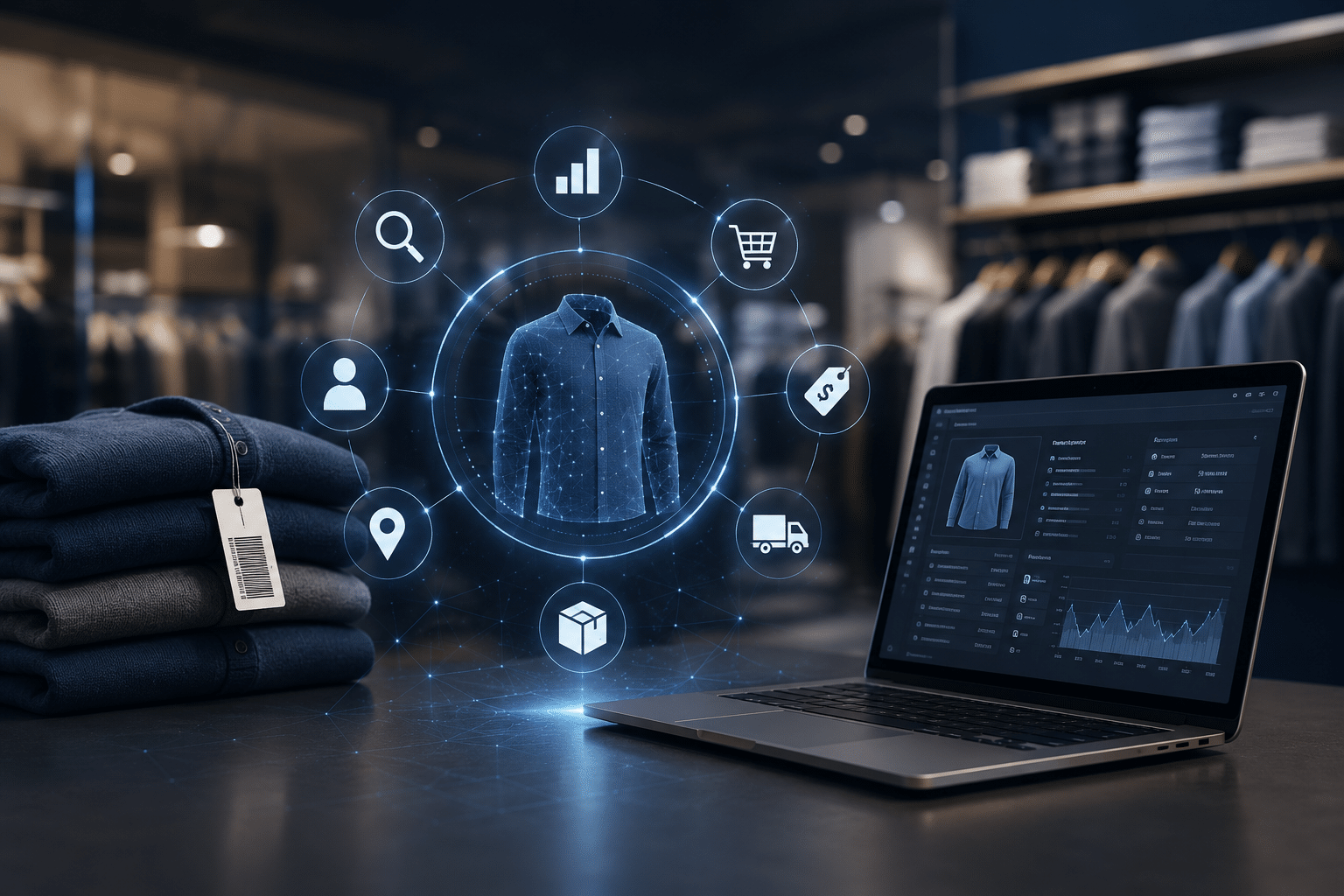
Product data used to sit quietly in the background of retail operations. It supported product listings, fed ecommerce pages, helped teams organize catalogs, and kept basic product information consistent across systems.
That role has changed.
In 2026, product data is becoming a direct driver of revenue. It shapes how products appear in AI search. It powers personalization. It influences digital shelf quality. It supports smarter merchandising decisions. It helps store teams sell with more confidence. It also gives retailers the structure they need to deliver smoother, more connected commerce across channels.
This matters because retail growth now depends on more than simply having the right products. Retailers also need the right product information, in the right format, available at the right moment, across every selling environment.
As AI-assisted shopping becomes more common, the quality of product data will increasingly determine whether a product gets found, recommended, compared, trusted, and purchased.
Product Discovery Is Moving Beyond Traditional Search
For years, retailers optimized product pages for shoppers typing keywords into search bars. That model is still important, but it is no longer enough.
AI shopping assistants are changing how customers discover products. Shoppers can now describe what they want in natural language, ask for recommendations, compare options, and receive curated product suggestions without browsing through long category pages.
Modern Retail has reported that 2026 is becoming a key year for AI shopping agents, with retailers, brands, marketplaces, and technology platforms competing to influence the next generation of product discovery. Retail Dive has also noted that retailers are making bigger bets on agentic AI commerce, even as this shift creates new risks around customer relationships and data control.
For retailers, this creates a major question: when an AI assistant recommends products, which products will it choose?
The answer depends heavily on product data.
AI systems need structured, accurate, detailed, and consistent information to understand what a product is, who it is for, how it compares, where it is available, and why it is relevant to a shopper’s request. Basic product names and short descriptions are not enough.
A product that includes rich attributes, complete descriptions, accurate availability, clear sizing, category logic, materials, use cases, pricing, images, fulfillment options, and compatibility details has a stronger chance of being understood by AI-powered discovery tools.
That makes product data a visibility asset.
AI Search Rewards Structured Product Information
Retailers are already adapting their product pages for an AI-driven search environment. Modern Retail recently reported that retailers and brands are working to make product pages more readable for AI bots that collect information and present recommendations through tools like ChatGPT and other AI agents.
This shift turns product data into a new kind of search engine optimization.
Traditional SEO focuses on pages, keywords, metadata, and backlinks. AI search visibility depends on something broader. It requires product content that machines can interpret correctly and shoppers can trust immediately.
That includes:
- Complete product titles
- Clean category structures
- Accurate product attributes
- Consistent naming conventions
- Rich product descriptions
- Clear specifications
- High-quality images
- Accurate pricing
- Real-time availability
- Fulfillment and delivery information
- Store-level inventory signals
- Customer-facing and associate-facing product details
When product data is incomplete, inconsistent, or scattered across systems, AI tools may misunderstand the product or ignore it completely. When the data is structured and reliable, the product becomes easier to surface in search results, AI recommendations, comparison tools, retail media placements, and personalized shopping journeys.
For retailers using a unified platform like Jesta I.S. Vision Suite 360, this creates a clear advantage. Product data does not have to live in disconnected spreadsheets, ecommerce tools, planning systems, and store applications. It can become part of a connected retail foundation that supports both operations and growth.
The Digital Shelf Is Now a Revenue Channel
The digital shelf is no longer just an ecommerce concern. It influences how shoppers discover, compare, and evaluate products across websites, marketplaces, apps, social platforms, AI assistants, and even physical stores.
A weak digital shelf creates friction. A product may appear with missing images, inconsistent pricing, outdated descriptions, unavailable sizes, weak attributes, or unclear fulfillment options. Each gap makes it harder for shoppers to trust the product and harder for systems to recommend it.
A strong digital shelf does the opposite. It improves visibility, strengthens conversion, supports cross-channel selling, and gives teams better insight into what drives performance.
In 2026, this matters even more because product pages are no longer built only for human shoppers. They are also being read by AI systems, search platforms, recommendation engines, digital assistants, retail media networks, and internal associate tools.
Retailers should treat every product page as a performance asset. That means product data needs to answer the questions shoppers and AI tools are likely to ask:
- What is this product?
- Who is it for?
- What problem does it solve?
- What size, color, fit, material, or technical details matter?
- Where is it available?
- Can it be picked up, shipped, reserved, exchanged, or returned?
- What related products should be considered?
- What makes it a better choice than alternatives?
When retailers answer these questions through structured data, they make products easier to discover and easier to sell.
Better Product Data Powers Personalization
Personalization depends on product understanding.
Retailers cannot deliver meaningful recommendations if their systems do not understand product relationships, customer preferences, inventory status, location availability, pricing rules, and fulfillment options.
A customer looking for “comfortable black shoes for work under $150” is not just searching for a color and a category. They are expressing intent. To respond well, a retailer needs product data that connects color, style, price, size, use case, comfort features, inventory availability, store location, delivery options, and customer history.
This is where product data becomes more than content. It becomes decision infrastructure.
DoorDash’s launch of a conversational shopping assistant shows where the market is heading. Shoppers can describe what they need, share a recipe, upload a list, and receive a shoppable cart. That type of experience depends on structured product data, customer context, substitution logic, availability, and real-time commerce connections.
Retailers need the same discipline across categories. Whether the customer is shopping for apparel, footwear, grocery, electronics, home goods, or specialty products, personalization only works when the product data is complete, connected, and current.
Jesta’s Retail Management Suite supports this need by helping retailers harmonize people, data, and channels. That unified foundation is important because personalization cannot perform well when ecommerce, merchandising, inventory, stores, and analytics operate from different versions of the truth.
Product Data Improves Merchandising Decisions
Product data also has a major operational role.
Merchandising teams make decisions every day about assortments, pricing, promotions, allocation, replenishment, markdowns, and lifecycle management. Those decisions become stronger when they are supported by clean product data and connected performance signals.
For example, product data can help merchandising teams understand:
- Which attributes are driving sell-through
- Which products are performing differently by region or channel
- Which sizes, colors, or variants are underperforming
- Which products are frequently viewed but not purchased
- Which items need stronger descriptions or imagery
- Which categories are exposed to stockout or overstock risk
- Which substitutes or related products should be promoted
- Which products deserve more visibility in search and recommendations
This is why product data should not be treated as an ecommerce task only. It should be part of the merchandising operating model.
With Jesta I.S. Merchandising ERP, retailers can connect planning, pricing, allocation, inventory, and analytics around a stronger operational data foundation. That makes product information more useful for both customer-facing experiences and internal decision-making.
When product data is tied to merchandising workflows, it becomes easier to act on performance. Teams can adjust assortments, refine product content, improve allocation, and align pricing decisions with demand signals.
Connected Commerce Depends on Product Data
Connected commerce promises a smoother experience across ecommerce, stores, marketplaces, mobile apps, customer service, and fulfillment. But that experience only works when product data is consistent across every touchpoint.
A customer should not see one description online, a different product name in the store system, a conflicting price at checkout, and inaccurate availability in a pickup flow. Those disconnects weaken trust and create operational waste.
Jesta’s blog on unified commerce ERP highlights the importance of consistent pricing, inventory availability, service, and master data across web, marketplaces, mobile apps, associate tools, and brick-and-mortar stores.
Product data sits at the center of that consistency.
It helps connect:
- Product detail pages
- POS systems
- Store associate tools
- Inventory systems
- Order management
- Warehouse operations
- Pricing and promotions
- Customer service
- Analytics dashboards
- AI and recommendation engines
When these systems use aligned product data, retailers can reduce friction across the entire selling journey. Shoppers can find products faster. Associates can answer questions with confidence. Ecommerce teams can publish more accurate product pages. Merchandising teams can make better decisions. Fulfillment teams can keep promises more reliably.
This is where product data becomes a revenue engine. It does not only improve content. It improves execution.
Store Teams Need Product Data Too
The product data conversation often starts online, but it should not stop there.
Store associates also need fast access to accurate product information. Customers expect associates to know what is available, what fits their needs, what alternatives exist, and whether products can be ordered, reserved, transferred, or delivered.
Modern Retail has covered how retailers are bringing AI into stores through tools that provide product information, inventory visibility, and assisted selling support. These use cases show that AI is not only changing ecommerce. It is also changing the role of the store.
For AI-powered store tools to work, retailers need reliable product data. Associates cannot deliver confident service if the information behind the tool is incomplete or outdated.
Product data supports better store selling by helping associates:
- Compare products quickly
- Recommend alternatives
- Check inventory across locations
- Explain product features
- Support endless aisle selling
- Reduce lost sales from unavailable items
- Strengthen customer confidence
Jesta’s blog on real-time store inventory management connects closely to this point. Product data and inventory data work together. A retailer needs to know what the product is, where it is, how it can be sold, and how quickly it can reach the customer.
Product Data Also Supports Retail Media
Retail media is becoming more connected to commerce performance. Ads, sponsored placements, recommendations, and personalized offers all depend on product-level accuracy.
If product data is weak, retail media performance suffers. The wrong products may be promoted. Campaigns may point shoppers to incomplete pages. Products may appear in the wrong category or fail to match shopper intent. Availability gaps may waste media spend. Poor product content may reduce conversion after the click.
If product data is strong, retail media becomes more efficient. Campaigns can align with inventory, pricing, margin, seasonality, and customer demand. Product attributes can improve targeting. Search and recommendation placements can become more relevant. Merchandising and marketing teams can work from shared data instead of disconnected reports.
Retail TouchPoints has noted that commerce is moving toward environments where platforms can recommend products, manage checkout, and connect transactions to fulfillment through AI-enabled experiences. In that context, product data becomes essential not only for visibility, but also for conversion and execution.
This is why retailers should connect product data, merchandising data, inventory data, and marketing performance data. The more connected these signals become, the easier it is to turn product visibility into profitable growth.
How Retailers Can Turn Product Data Into a Revenue Engine
Retailers do not need to rebuild everything at once. They can start by treating product data as a strategic growth asset instead of a back-office maintenance task.
A strong approach includes five priorities.
1. Build a Clear Product Data Foundation
Retailers should define the core product attributes that matter by category. Apparel, footwear, grocery, electronics, beauty, and home goods all require different product details.
The goal is not to add more data for the sake of it. The goal is to add useful, structured, searchable, and actionable data.
2. Connect Product Data Across Systems
Product data should not be trapped in separate tools. Retailers need consistent information across ERP, ecommerce, POS, OMS, warehouse, store, and analytics systems.
This is where a unified retail platform becomes important. Jesta helps retailers connect commerce operations around a stronger data foundation, reducing the silos that slow teams down.
3. Improve Product Content for Humans and AI
Product descriptions should be clear, complete, and useful. But they should also be structured enough for AI tools, search engines, recommendation systems, and internal applications to understand.
Retailers should review titles, descriptions, attributes, images, size guides, specifications, and FAQs with both shoppers and AI-assisted discovery in mind.
4. Use Product Data in Merchandising Decisions
Product data should feed planning, allocation, pricing, replenishment, and markdown decisions. Teams should use product attributes alongside sales, inventory, margin, and customer behavior data to understand what is working and why.
This makes product data part of performance management, not just product setup.
5. Keep Product Data Current
Outdated product data creates broken experiences. Retailers need processes to keep product information accurate as assortments change, inventory moves, prices update, and new selling channels emerge.
The more AI-assisted shopping grows, the more important freshness becomes.
Why This Matters for 2026 Retail Growth
Retailers are entering a period where product visibility will depend on more than brand recognition, paid media, and traditional search rankings.
AI tools will interpret product data. Digital shelves will shape customer decisions before the transaction. Personalization will depend on structured product understanding. Store teams will need better product intelligence. Merchandising teams will need more connected signals. Retail media will depend on product-level accuracy.
In this environment, product data becomes a growth lever.
Retailers that invest in product data quality will be better positioned to show up in AI search, improve digital shelf performance, personalize experiences, support store associates, and make smarter merchandising decisions.
Retailers that ignore it may struggle to be found, trusted, recommended, and purchased.
Product data is no longer just a catalog requirement. It is the foundation for modern retail visibility, decision-making, and revenue growth.
For retailers looking to connect product data with merchandising, inventory, store execution, and unified commerce, Jesta I.S. provides the operational foundation to turn product information into business performance.
Common Questions
Why is product data important for AI search in retail?
Product data helps AI tools understand what a product is, who it is for, where it is available, and when it should be recommended. The more structured and complete the data is, the easier it becomes for AI-assisted shopping tools to surface the right products.
How does product data improve the digital shelf?
Product data improves the digital shelf by making product pages more complete, accurate, searchable, and trustworthy. It supports better product titles, descriptions, attributes, images, pricing, availability, and fulfillment details.
How does product data support personalization?
Personalization depends on matching customer intent with the right products. Retailers need structured product data, inventory visibility, pricing rules, and customer context to recommend products that are relevant and available.
Solutions like Jesta’s Merchandising ERP help retailers manage product information, pricing, allocation and assortment decisions more effectively.
Why should merchandising teams care about product data?
Merchandising teams can use product data to understand performance by attribute, category, channel, location, size, color, price point, and customer demand. This supports better assortment, allocation, replenishment, pricing, and markdown decisions.
